


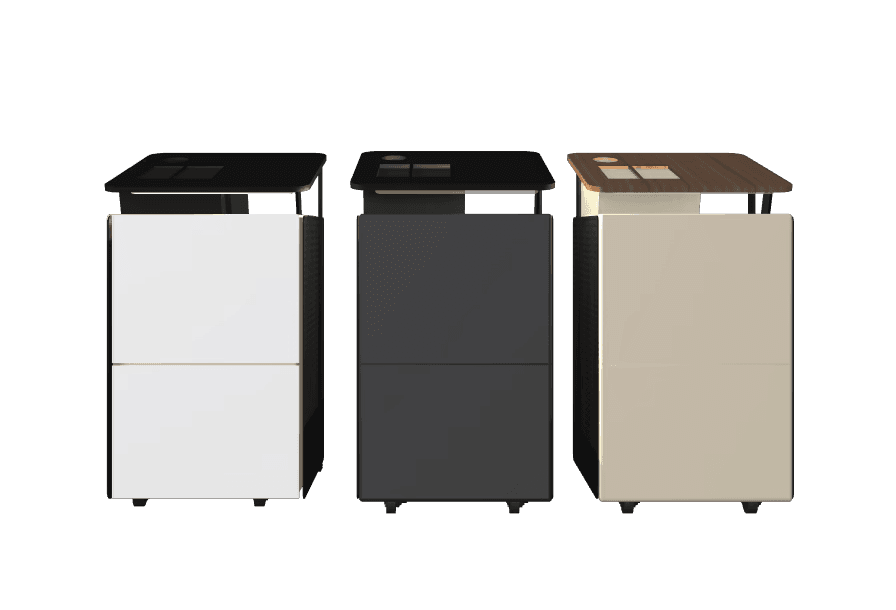
3D renders
5
Weeks to design 3D and display prototypes
+10
Funding opportunities pitched to
3
Stakeholders across 3 Countries- Dubai, India, Singapore
5
engineering and service design teams worked with
I collaborated with the founding team of Oceans & Us Dubai, a sustainability focused organization, on their mission to protect and restore marine ecosystems.
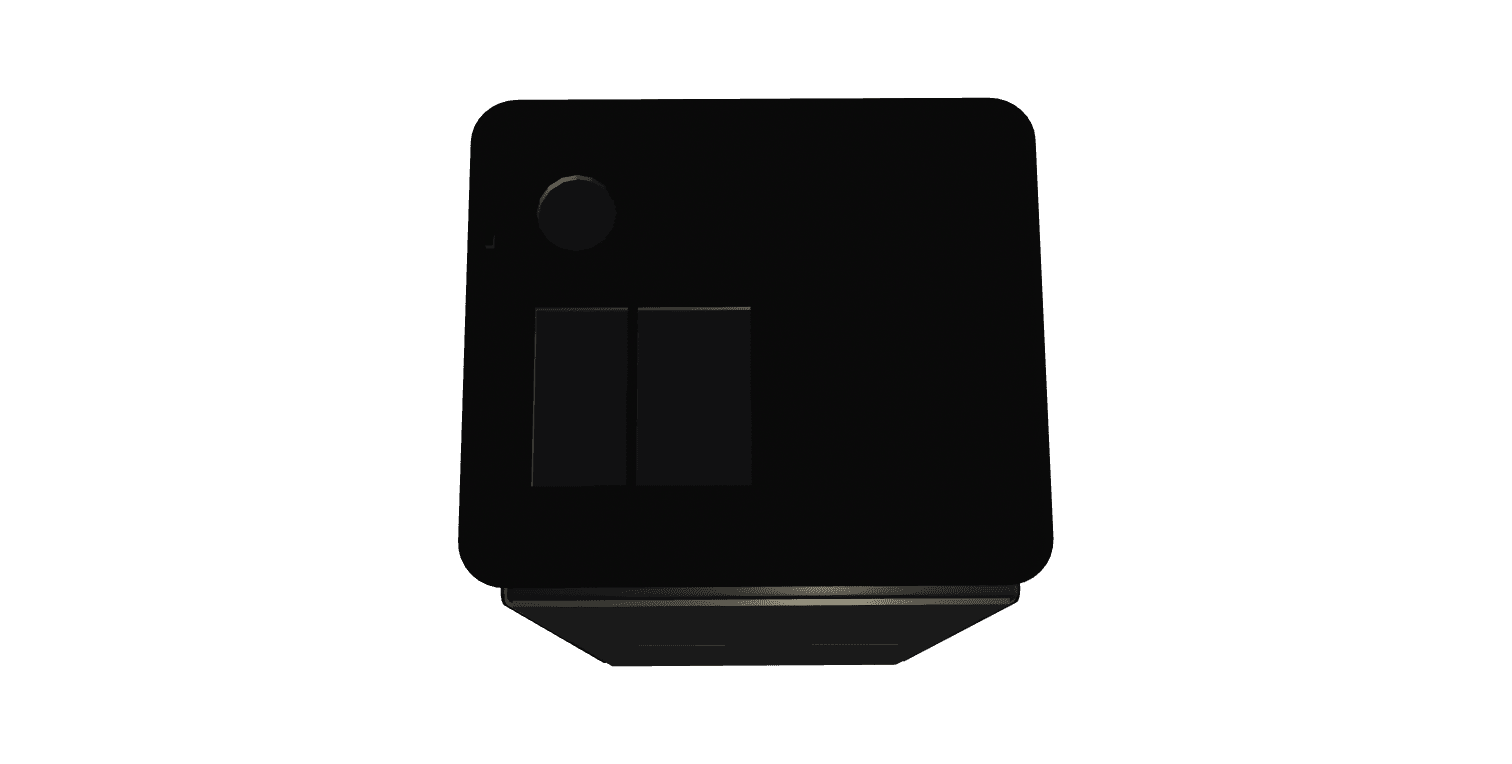
Their vision centers on creating scalable solutions that promote balance between people and the planet, like this smart PET bottles recycle bin.
current stats
Only 9-10% of plastic gets recycled every year in the Middle East, and globally.
Research showed that most users can’t easily identify bins that collect PET bottles/recyclable plastic items. When they do, they are not sure if it is actually being recycled and hence do not see any personal benefit in finding the right bin to place it in.
Overall, users are not confident that plastic waste is being directed to the right recycling centers and being reused.

User quotes
16 UAE residents reported their points of confusion regarding recycling bottles.
design goals
Next steps were to design a bin that:
Has a distinct identity
Is intuitive in
its use
Is transparent about its recycling process
Provides benefits to users for their time
Team Reviews
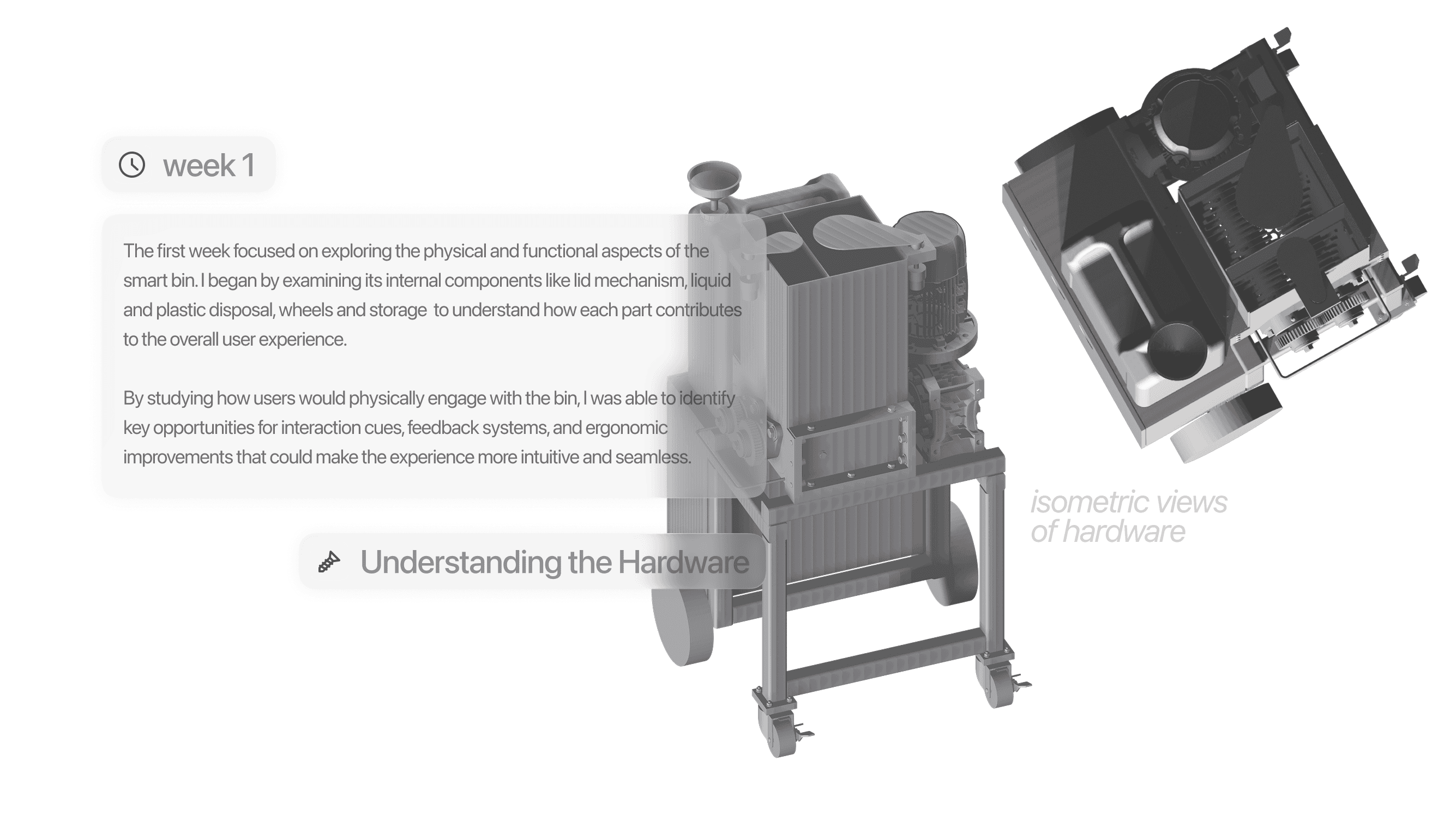
Our weekly check-ins focused on refining the bin’s functionality, improving user accessibility, and ensuring the internal mechanism aligned with the updated form.

the ecosystem
Creating this model helped me (and the team) visualize how multiple systems, actors, and factors interact in creating an effective smart recycling ecosystem.

Process overview
The project followed the Double Diamond process moving from research and discovery to ideation, prototyping & refinement to ensure both user needs and design intent were aligned.
Discover
Define
Develop
Deliver
Decision making > Final Prototype Specs
the form
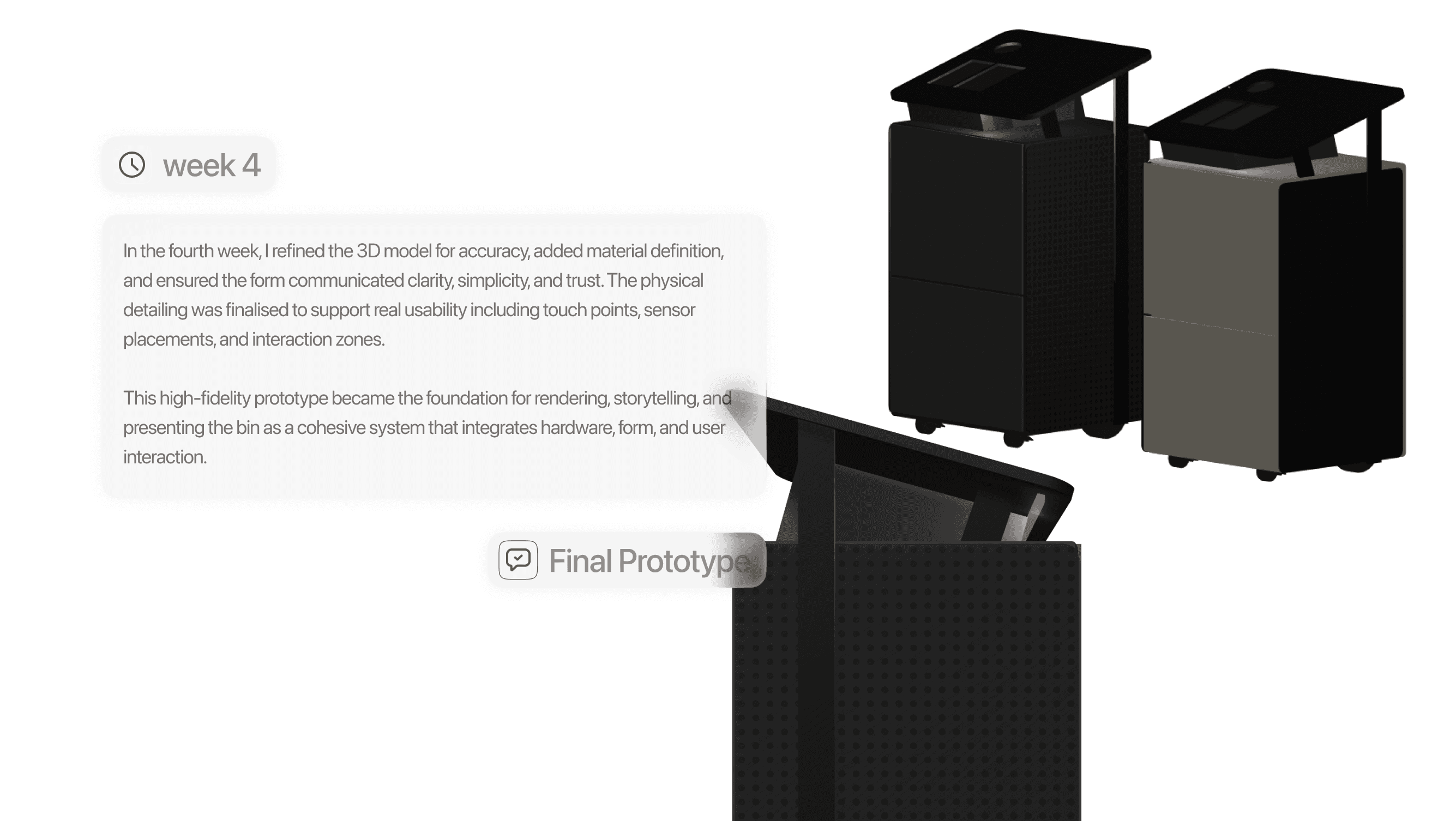
Working closely with engineers, we refined proportions, access points, and internal mechanisms across weekly reviews. Every physical decision (flush handles, perforated panels, contrasting input zones) was made with the digital experience in mind, ensuring the hardware and app felt like one coherent system rather than two separate products.

the experience
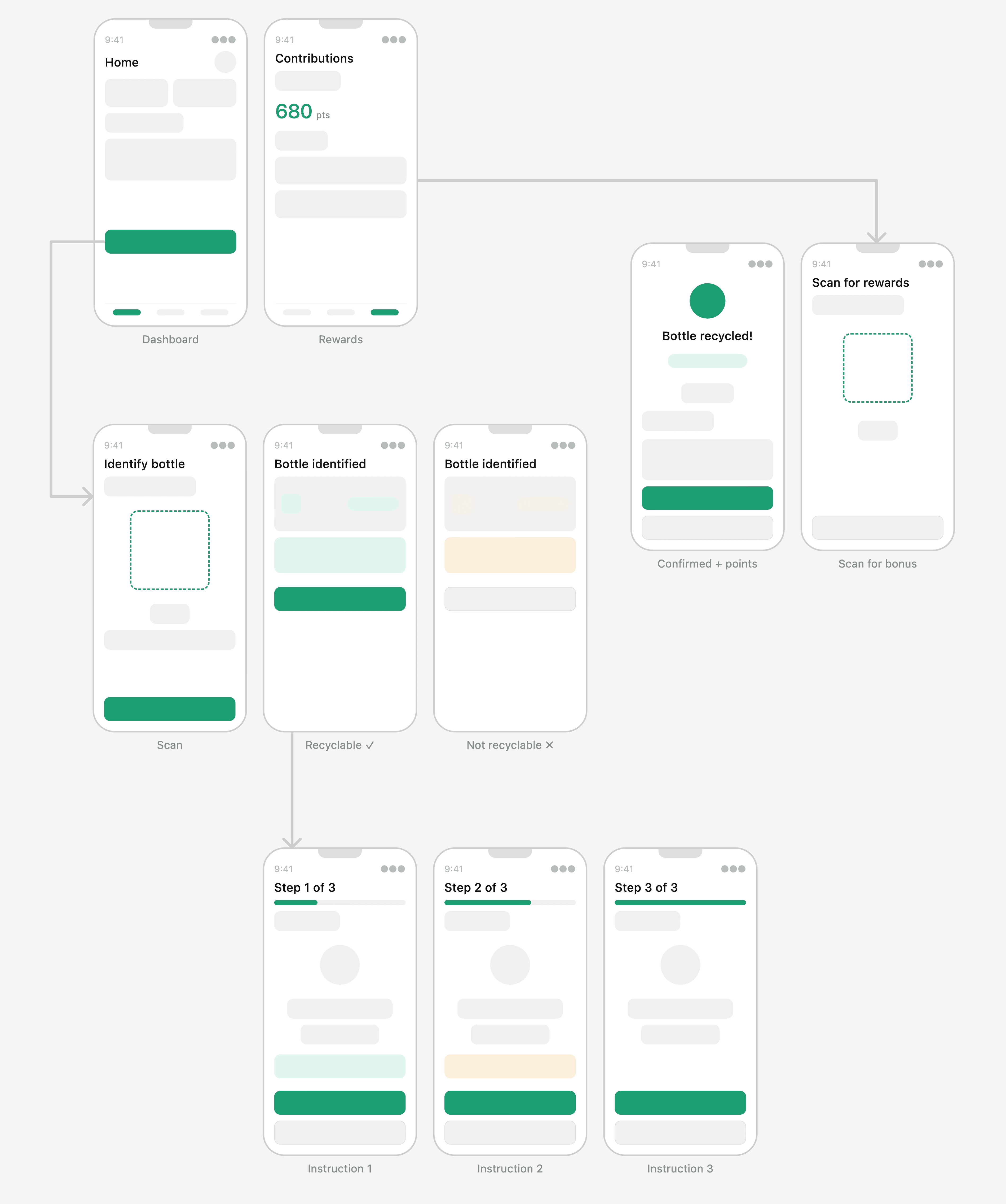
With research insights in hand, we mapped the full user journey from bin-side scanning to reward redemption: defining decision points, error states, and re-entry loops before designing screens.

Low fidelity wireframes to allow quick pressure testing of task flows with the team and validate whether recycling process felt intuitive and worht the effort at every step.
outcome


prototypes
The app and bin were designed as a single interactive system, with each screen state tied directly to a physical moment: scan, deposit, collect reward. Prototypes were kept WIP as the team awaited final funding approval, with everything documented and ready to resume after the project got the green light.

Key Learnings
Validate regulary, with or without resources: Once the working prototype was developed, it gave the team concrete proof the concept held up. This made success more tangible and mattered more than any slide deck when presenting to investors.
Cross-disciplinary collaboration enhances the design process: Working alongside engineers and sustainability specialists meant every design decision had to hold up technically, commercially, and experientially at the same time.
Outcomes aren't always in your control, the process is: The project didn't move forward for reasons outside the team's hands, but the rigour of the process during research, iteration, pitch, and prototype testing was solid and replicable.
Industrial and service design solve the same problem: The biggest shift was realising the bin and the app weren't two workstreams. Every physical decision had a downstream effect on the digital experience, and designing them in parallel made both stronger.
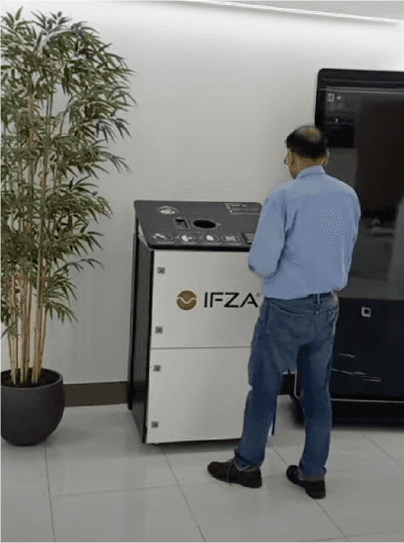
The first physical prototype

A how-to-use sketch during ideation
let’s chat!

